Practical strategies to help your child’s social skills, communicate confidently, make friends easily, and thrive in every social setting.
In today’s fast-moving and highly connected world, a child’s social skills are just as important as academic achievements. A child who can communicate clearly, understand others’ feelings, resolve conflicts, and build friendships confidently is better equipped for lifelong success. Social skills shape how children interact with family, peers, teachers, and eventually colleagues.
Building your child’s social skills does not happen overnight. It is a gradual process that begins in infancy and continues through adolescence. With patience, guidance, and everyday practice, parents can nurture these essential abilities in meaningful ways.
Table of Contents
Why A Child’s Social Skills Matter
A child’s social skills influence a child’s emotional well-being, academic success, and future career prospects. Children with strong interpersonal abilities tend to:
Build healthy friendships
Express their thoughts confidently
Handle disagreements calmly
Show empathy and kindness
Adapt well to new environments
On the other hand, children who struggle socially may feel isolated, anxious, or misunderstood. The good news is that social skills can be taught and strengthened at any stage of development.
Start Early: The Foundation Years
Social development begins at home. Even infants learn by observing facial expressions, tone of voice, and body language. As toddlers grow, they begin imitating behaviors and learning basic social rules.
Simple activities like smiling, maintaining eye contact, and responding warmly to your baby’s sounds lay the groundwork for communication. As children grow, encourage them to:
Say “please” and “thank you.”
Greet people politely
Take turns during play
Share toys with siblings
Consistency and modeling are key. Children learn more from what they see than what they are told.
Teach Empathy Through Everyday Moments
Empathy—the ability to understand and share another person’s feelings—is at the heart of strong social skills. You can nurture empathy by helping your child identify emotions in themselves and others.
For example, if your child sees another child crying, you might say, “She looks sad. What do you think happened?” This encourages perspective-taking. When your child experiences frustration or disappointment, acknowledge their feelings instead of dismissing them.
Reading storybooks together also offers excellent opportunities to discuss characters’ emotions and choices. Ask open-ended questions like, “How do you think he felt?” or “What would you do in that situation?”
Encourage Cooperative Play
Play is one of the most powerful tools for social learning. Through play, children practice sharing, negotiating, problem-solving, and teamwork.
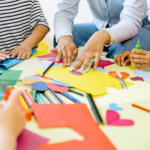
Arrange playdates with children of similar ages. Structured activities such as building blocks, board games, or team-based crafts encourage cooperation. Unstructured play, like pretend games, allows children to practice communication and creativity.
During conflicts, resist the urge to immediately intervene. Instead, guide them by asking, “How can we solve this problem?” This teaches conflict resolution rather than dependence on adult solutions.
Develop Communication Skills
Effective communication includes both speaking and listening. Teach your child to:
Maintain eye contact while talking
Wait for their turn to speak
Listen without interrupting
Use respectful language
Practice conversations at home. Role-play common social scenarios such as introducing themselves to a new classmate or asking to join a game. These rehearsals boost confidence in real-life situations.
Encourage your child to express feelings using words instead of actions. For instance, teach them to say, “I feel upset when you take my toy,” rather than reacting physically.
Children who can manage their emotions are better prepared to handle social situations. Emotional regulation helps prevent outbursts and supports positive interactions.
Teach calming techniques such as:
Deep breathing exercises
Counting slowly to ten
Taking a short break when overwhelmed
Create a safe space where your child feels comfortable sharing emotions without judgment. When children understand their feelings, they are less likely to react impulsively in social settings.
Promote Team Activities
Group activities provide valuable opportunities for social growth. Consider enrolling your child in sports, dance classes, art groups, or music lessons. Being part of a team teaches cooperation, discipline, and respect for rules.
Sports, in particular, encourage teamwork and resilience. Children learn to win gracefully and lose with dignity. They also practice leadership and collaboration skills.
Even family activities like cooking together or organizing a small event can teach responsibility and teamwork.
Model Positive Social Behavior
Children observe adults closely. If they see parents communicating respectfully, apologizing when wrong, and showing kindness, they are more likely to mirror these behaviors.
Demonstrate active listening by giving your child full attention during conversations. Avoid interrupting or dismissing their concerns. Show them how to handle disagreements calmly and respectfully.
When conflicts arise at home, use them as teaching moments. Explain how compromise works and why understanding others’ perspectives matters.
Teach Problem-Solving Skills
Social challenges are inevitable. Teaching children how to solve problems independently builds confidence.
When your child faces a disagreement with a friend, guide them through steps such as:
Identify the problem
Think of possible solutions
Consider the consequences
Choose the best option
Avoid solving every issue for them. Instead, empower them to think critically and make decisions.
Limit Screen Time and Encourage Real Interaction
While technology offers many benefits, excessive screen time can reduce opportunities for face-to-face interaction. Encourage activities that involve direct communication, such as family discussions, outdoor games, and group projects.
Balance digital engagement with real-world social experiences. Encourage your child to talk about their day, describe experiences, and engage in meaningful conversations.
Support Shy or Introverted Children
Not all children are naturally outgoing, and that is perfectly normal. A child’s social skills do not mean being the loudest in the room; they mean being comfortable and respectful in interactions.
If your child is shy:
Avoid labeling them as “shy” in front of others
Provide small, gradual social opportunities
Praise effort, not just results
Confidence grows through positive experiences. Celebrate small achievements, such as initiating a conversation or participating in a group activity.
Recognize and Address Social Difficulties
If your child consistently struggles with making friends, understanding social cues, or managing emotions, consider seeking guidance from a teacher, school counselor, or child development specialist.
Early support can make a significant difference. Many children benefit from social skills groups, where they practice interactions in structured settings.
Create a Supportive Environment
A nurturing home environment forms the backbone of social development. Encourage open communication, celebrate individuality, and provide reassurance during setbacks.
Remember that every child develops at their own pace. Comparing your child to others may create unnecessary pressure. Instead, focus on gradual improvement and consistent encouragement.
Final Thoughts
Building your child’s social skills is a lifelong journey that begins at home and extends into school and community life. Through empathy, communication, cooperation, and emotional understanding, children learn how to connect meaningfully with others.
Parents play a powerful role in shaping these abilities. By modeling positive behavior, encouraging healthy interactions, and providing gentle guidance during challenges, you give your child the tools needed to navigate friendships, classrooms, and eventually workplaces with confidence.
Social skills are not simply about making friends—they are about building resilience, understanding diversity, and developing emotional intelligence. With patience, practice, and support, your child can grow into a compassionate, confident individual ready to thrive in any social environment.