

Sure! Here’s a well-structured, 800-word blog article on “Improve Communication Skills in Children.” It’s written in a warm, informative, and parent-friendly tone that would suit a parenting or education blog.
Improve Communication Skills in Children
Good communication is one of the most valuable life skills a child can develop. It helps them express their thoughts, understand others, build relationships, and handle emotions in a healthy way. While some children are naturally talkative and expressive, others may need more support and encouragement to open up. The good news is that communication is a skill — and like any skill, it can be nurtured through patience, practice, and the right environment.
Table of Contents
In this article, we’ll explore simple, effective ways parents and caregivers can help children become confident communicators.
1. Start with Listening
Before children can become good speakers, they need to be good listeners. Communication is a two-way process — speaking and listening go hand in hand. Encourage your child to pay attention when someone is talking, make eye contact, and respond thoughtfully to increase communication skills in Children.
You can model this behavior at home. When your child talks to you, stop what you’re doing and give them your full attention. Nod, smile, and respond to what they say. This shows them that their words matter and teaches them the importance of listening to others. In this easy way, we can improve communication skills in children
Simple listening games like “Simon Says” or “Telephone” can also make listening practice fun and interactive.
2. Encourage Conversations Every Day
Daily conversation is one of the easiest and most effective ways to build communication skills. Talk to your child about their day, their friends, or even what they had for lunch. Ask open-ended questions that invite more than a “yes” or “no” response — for example,
- “What was your favorite part of school today?”
- “How did you feel when that happened?”
These types of questions encourage children to think, reflect, and express themselves more fully.
You can also share your own thoughts and stories. When children see adults communicating openly, they learn how to express ideas clearly and confidently.
3. Read Together — and Talk About It
Reading is a powerful tool for developing language and improve communication skills in children. Books expose children to new words, ideas, and ways of expressing feelings. But the real magic happens when you talk about what you read.
After reading a story, discuss the characters and their emotions. Ask your child what they would have done in a similar situation. Encourage them to predict what might happen next. This builds comprehension, vocabulary, and the ability to articulate opinions to improve communication skills in children.
Even picture books for younger children can spark meaningful conversations — for example, “What do you think the puppy is feeling?” or “Why do you think the girl is smiling?”
4. Teach the Power of Nonverbal Communication
Communication isn’t only about words. Facial expressions, tone of voice, and body language also play a big role in how we connect with others. Teach your child to notice these cues — for instance, recognizing when someone looks sad, bored, or excited.
Role-playing can help with this. You can act out different emotions and ask your child to guess what you’re feeling, or switch roles so they can practice expressing emotions through gestures and expressions. Understanding nonverbal communication helps children develop empathy and emotional intelligence to improve communication skills in Children.
Also read: Cultivating Inner Strength: How to Make Your Child Mentally Strong
5. Build Vocabulary Naturally
A strong vocabulary gives children the tools to express themselves clearly. You don’t have to “teach” new words in a formal way; instead, weave them naturally into daily life.
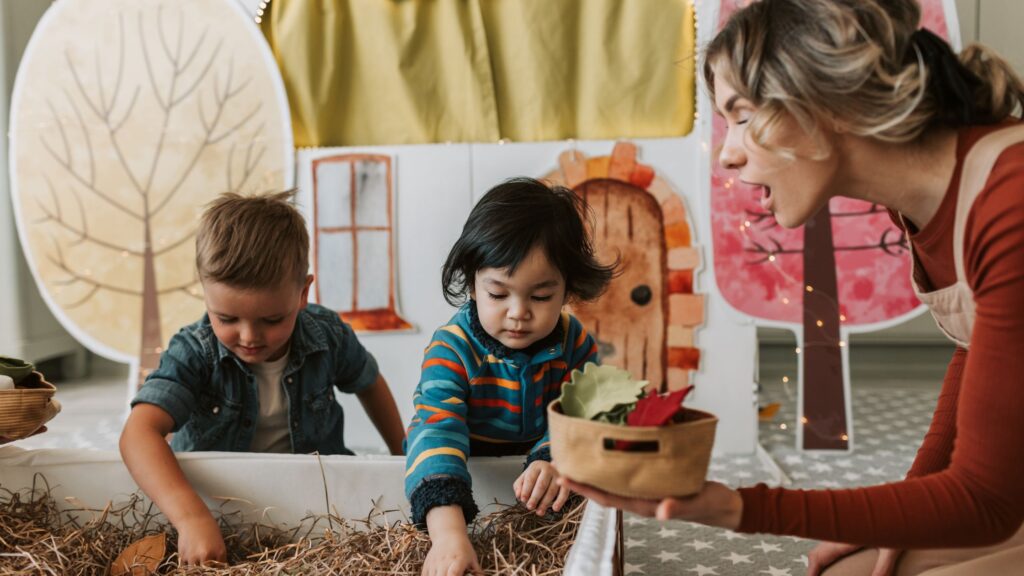
When you cook together, name ingredients and describe their colors or textures. When you go for a walk, talk about what you see — the tall trees, the chirping birds, the smooth stones. Encourage your child to ask questions and repeat new words.In this way you can improve communication skills in Children.
Over time, this casual exposure builds a rich vocabulary without making it feel like a lesson.
6. Encourage Storytelling and Imagination
Children love stories — and storytelling helps them organize thoughts, use descriptive language, and express ideas creatively. Encourage your child to make up their own stories. They can tell a story about their favorite toy, an imaginary adventure, or even what happened at school in their own words. It is an another way to improve communication skills in Children.
You can make this a family game: start a story and take turns adding to it. This not only sparks imagination but also teaches children how to listen, build on ideas, and communicate collaboratively.
7. Model Positive Communication
Children learn by watching adults. The way you communicate — how you express frustration, give feedback, or handle disagreements, it helps to increase communication skills in Children.
Try to model calm, respectful communication. When you make a mistake, apologize. When you’re happy, express it. When your child is upset, validate their feelings before offering advice. This teaches them that emotions are normal and that communication is a safe space for expressing them.
8. Limit Screens and Encourage Real Conversations
Technology has its benefits, but too much screen time can reduce opportunities for face-to-face interaction. Try to set aside “tech-free” times — during meals or before bed by this way you can improve communication skills in Children.
Play board games, cook together, or take walks where you chat about anything that comes to mind. These real-life interactions help children learn tone, timing, and body language — all crucial parts of communication that screens can’t replace.
Also read: Raising Mentally Strong Kids: Key Strategies
9. Celebrate Small Wins
Improving communication skills takes time. Celebrate your child’s progress — whether it’s using a new word, expressing a feeling clearly, or asking a thoughtful question. Praise builds confidence, and confidence encourages more communication.
Remember, every child develops at their own pace. The goal isn’t perfection but growth — helping them feel heard, understood, and capable of expressing themselves.
Also read: How to Raise Emotionally Smart Kids (Starting with the 4 Core Feelings)
Final Thoughts
Strong communication skills help children navigate the world — from making friends and resolving conflicts to expressing dreams and fears. By nurturing listening, conversation, and empathy at home, you’re giving your child a lifelong gift: the ability to connect meaningfully with others.
The key is to make communication a natural, joyful part of everyday life. Talk, listen, read, and share stories — and watch your child’s confidence and connection grow with every word.
Also read: 9 Easy Ways to Boost Your Child’s Confidence and Pride





Good 👍